Coffee shop craziness … and how we spend our time

Just the other day I watched three young girls sitting together in a coffee shop.  I think they were friends but there was no real way of knowing as they did not interact with one another.  Instead, they were all absorbed in whatever the entertainment their mobile devices were offering: texting, surfing, organising photos, playing with apps.  I don’t know.  But it struck me as sad that throughout their time together, they barely acknowledged each other. Perhaps they were texting each other!  If that wasn’t so nearly possibly true, it would be funny.

The Sydney Herald (yes, in Australia) reported just last month that coffee shop owners have started to reduce the availability of free WiFi in their premises.  This has reportedly had the effect of bringing back the social vibe in cafes and bars – “people interacted more, they started to listen and talk to each other properly and weren’t constantly distracted by a screen”.

I read or heard something recently (though can’t remember where sadly – must have had some brain fog going on) that most of us think we choose to spend our time doing what we enjoy.  And yet when specifically asked what we enjoy doing we almost never answer with the things that fill our off-duty time.

A red cup and saucer holds a cappuccino coffee with a sprinkling of chocolate

I had first hand experience of this on a mindfulness retreat a couple of years ago.  A group of about twenty people were asked to list their top 20 most treasured experiences relating to each of the five senses – so that is one hundred experiences per person.  Without exception, no-one listed anything to do with the use of technological devices even though there were plenty present at the retreat.  Instead examples included watching the sun go down, hearing the wind in the trees, the taste of dark chocolate, the smell of freshly cut grass, the feel of freshly laundered bed sheets – you get the idea.  What was even more striking was that the leader of our group often worked with groups of young people and he informed us that the results of this exercise were near enough the same with teenagers and young adults.  So why don’t we put our devices down and go outside to do something we enjoy?

It strikes me that making considered choices about how we spend our time has numerous benefits, particularly if we switch our  mobile devices off whilst we are engaged in other activities.  We will reduce the electromagnetic fields in public areas, benefitting our own health and opening up social spaces again for those with electrosensitivity.  We will, arguably, have better quality social interaction.  We will get more pleasure from our experiences just through being more mindful.

Looking for an image to go with this blog I searched “friends sharing coffee”.  Practically every image which resulted from that search featured mobile technology of some kind.  I rest my case.

If not for yourself, do it for them

The baby cries and calls mom from a bed

In a house full of wireless devices,                              is it any wonder?

If you have one of these, and you have tried all the obvious methods for alleviating their distress, it may be time to take a good, hard look at the levels of EMFs in your home.  You should take a look anyway.  Children are far more vulnerable to EMFs and levels that may be able to be tolerated by the adults in the house may be causing distress to younger family members and compromising their healthy growth and development.

Specifically, your baby’s or child’s bedroom is the starting point for investigating this.  Baby monitors and night lights are the greatest concern.

The evidence shows that even quite low levels of light stops the production of melatonin and that low levels of melatonin increase the likelihood of cancers and other serious health problems developing.  (For more information about melatonin see here).  A baby has been used to darkness until it was born and it is very easy to condition a child to needing a light on at night, usually a practice begun by parents to make it easy to check that the baby is OK.  Powerwatch recommend that the only type of night light which should be used are very low power (usually plug mounted) orange or red lights that gently glow.  Orange and red lights hardly affect the production of melatonin, whereas white and blue-white lights can stop the production of melatonin for the whole night.

Caution should be exercised in choosing an alarm for your baby, the best type by far being the battery-operated, wire connected baby monitors as they give off virtually no EMFs.  Baby monitors plugged into the mains can give off quite high levels of EMFs and the advice is to ensure that they are at least 1 metre away from your babies head.  But the worst offenders are the wireless ‘freedom’ alarms which you can walk about with, as in order to communicate with the parents listening unit they usually give off high levels of radiofrequency radiation.  Some have been manufactured in such a way that only give off low fields but you can really only know by measuring the emitted fields.

Other things to be careful of in baby’s and children’s rooms include; sensor pads put under the mattress which can emit pulsing microwave radiation, dimmer switches and lights.  Keep anything electrical at least 1 metre away from where they sleep.

I have been into houses where the WiFi hub is in a child’s room which is the worst place to locate it,  And often DECT phone signals can pervade the whole house, obviously including the children’s bedrooms.  Starting with what is immediately apparent in the bedroom is helpful but a survey of the whole home could throw up unexpected sources of EMFs which are also having an effect on the environment around your child.


Colour-changing light bulbs…

The number of so-called ‘smart’ gadgets is growing at an alarming rate it seems.  Industry keen to take advantage of our thirst for gimmicks and  trinkets.

During a recent visit to my local electronics store I was fascinated by a smart light bulb which changes colour by means of some wireless technology.  So this thing can be set to change colour several times during an evening with a view to …. what I’m not exactly sure.  Increasing the toxic load of the environment, definitely, messing with your head, possibly.

Bulb with colorful light creative concept photo realistic vector backgroundDon’t get me wrong.  I am not against having a bit of fun.  I did the whole coloured light bulb thing when I was a kid.  But that is the point – these new smart light bulbs are aimed at adults.  And we should, and need, to know better.

It’s not just about the radio frequency pollution from unnecessary wireless signals, though that is all to easy to forget.  We can’t see it so how can it hurt us?  It is also to do with our primitive ‘cave-man’ brains, evolved to respond to blue light in the mornings and yellow in the evening.  In fact some of the sensitive systems in the body need these changes in light to trigger their functions.  One example is how exposure to blue light in the evenings can disrupt sleep.  We actually need soft candlelight!  Or at least an electrical equivalent.

But caution needs to be exercised here too, particularly for those of us with electrosensitivity.  Halogen light bulbs can give out quite high magnetic fields because of the way they are constructed.  If there is one of these bulbs in an unearthed bedside lamp there will be quite high electrical fields too.  Result – a high chance of sleep disruption.

There are suppliers of traditional incandescent bulbs on the internet and having just changed my bedside lamps to these I am enjoying the soft warm glow these are giving off and beginning to forget the harsh light the old halogen bulbs produced.

As the old adage says, there is a time and place for everything, including coloured light bulbs.  But these days, with so many gadgets on sale and the clever marketing that goes with them, we need to think carefully about what that may be.


WiFi – authorities seeing sense at last

Earlier this year, in an unprecedented move, France has passed a law entirely banning WiFi in nurseries and daycare settings.  The law goes on to restrict use of WiFi in primary schools to when it is actively being used for education.  This represents the first national implementation of the precautionary principle, in this case relating to the management of the prevalence of wireless technology.

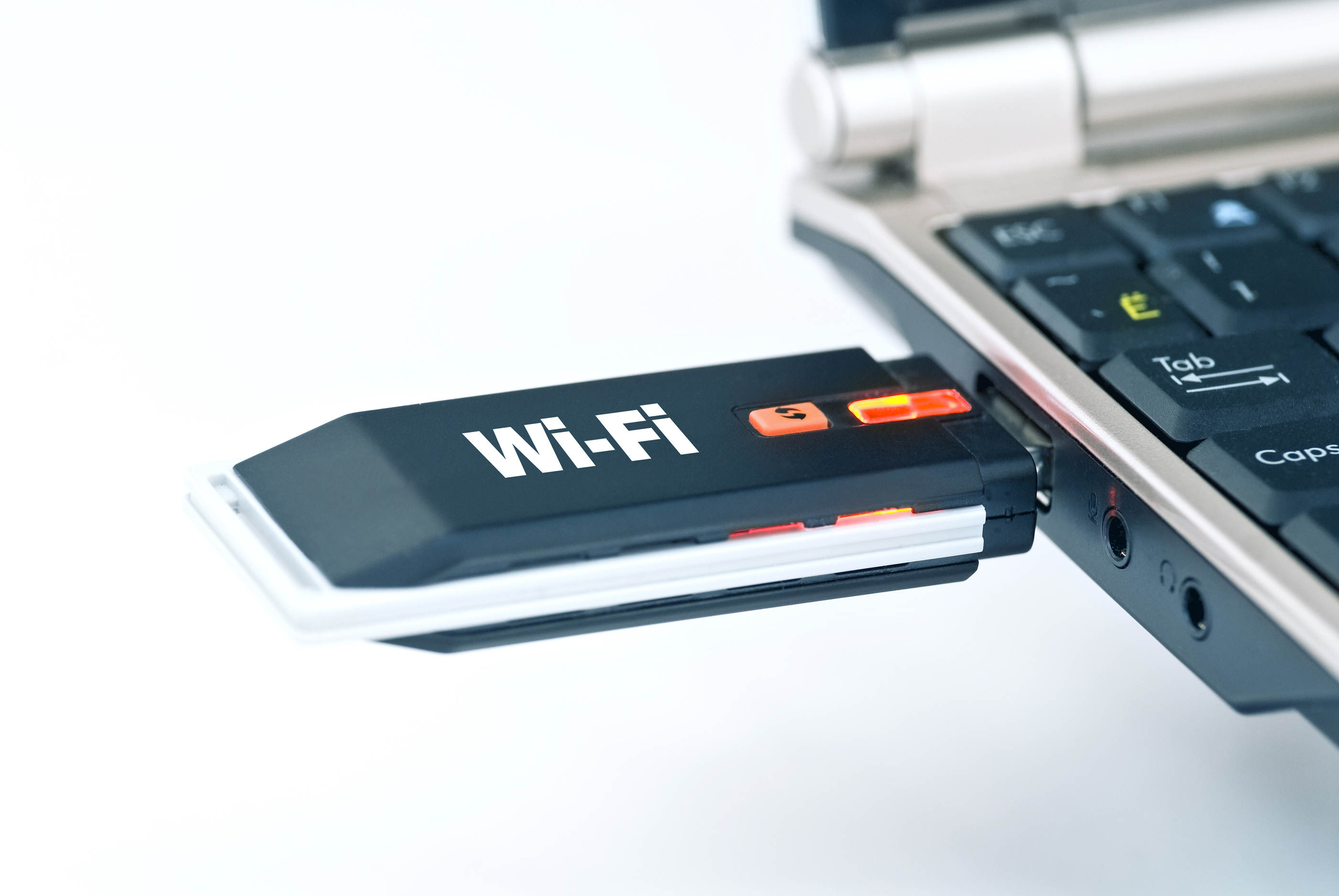
Wi-fi Plug

France is taking a proactive approach to mitigating potential harm from radio frequency EMFs.  As usual, the UK is lagging behind in taking these issues seriously instead leaving the precautionary principle to individual responsibility.  At the very least it is advisable to turn the WiFi off at night, and preferably any time when not in use.  An alternative approach is to use a cabled system which allows access around the house via the electrical circuit through use of a dLAN (direct local area network).  These are readily available via mainstream internet outlets and have the added advantage of boosting security of data, as wireless signals are known to be much easier to hack into.  For more information take a look at this link.

If you decide to go for this option remember to ensure that the wireless signal is disabled from your modem and computer, usually needing to be done within the setting options.


Fertility…on the decline

The new year might bring about thoughts of new beginnings.  But creating a new life is a lot easier said than done these days, with estimates suggesting that between 1 in 3 and 1 in 4 couples are having problems conceiving.  These rates are a dramatic increase on the infertility rates of our parents and grandparents.  Of course many people are leaving having a family until their thirties or older, and certainly that plays a part in conception difficulties.  But what else is it about our lives today which is taking its toll on our fertility?

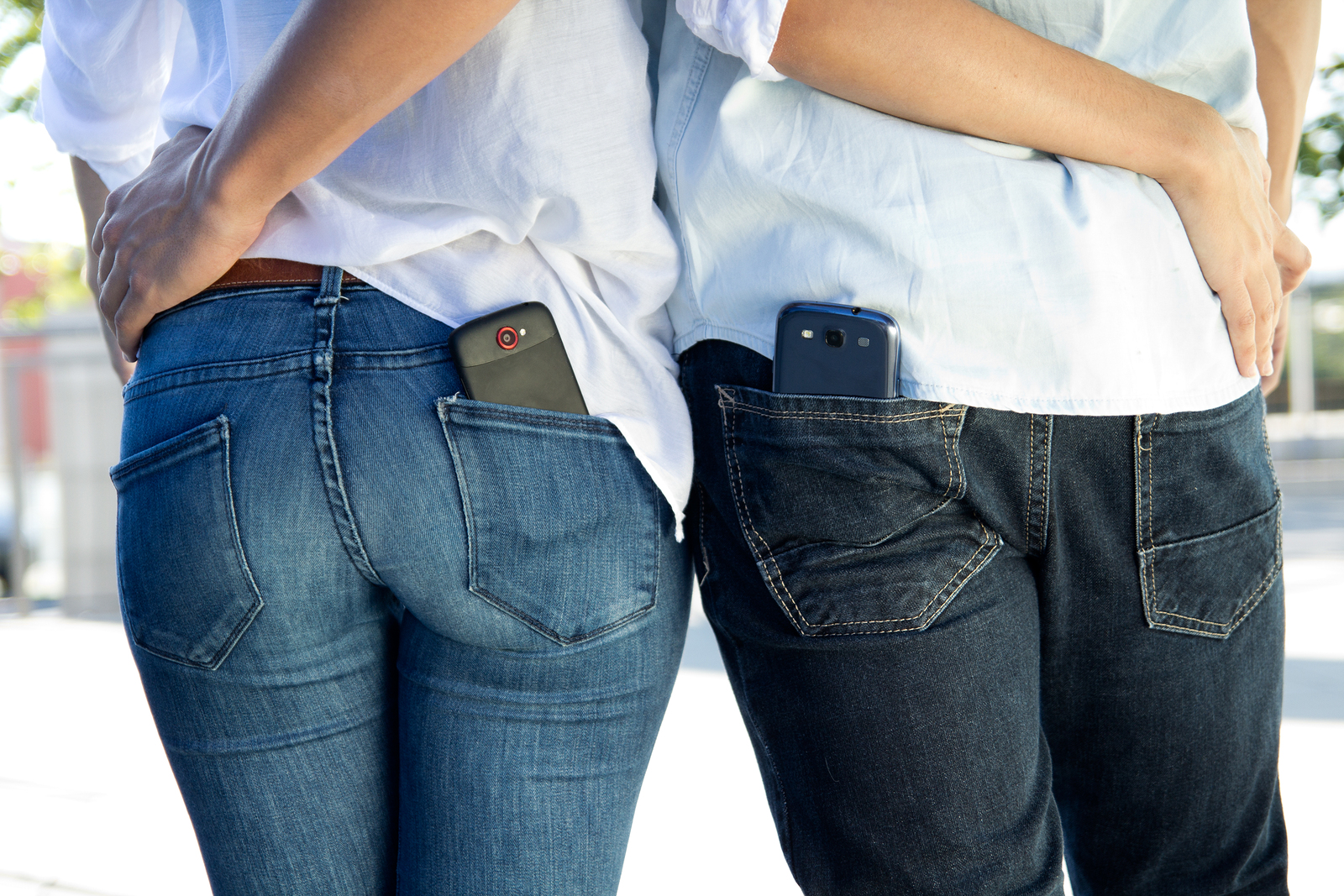
Back Portrait Of Young Couple With Mobile In The Pocket

Keeping phones, switched on, anywhere on our person at all is really not a good idea .  In ‘active mode’ they are irradiating, or ‘zapping’, the soft tissues of our body.  When phones are kept in trouser pockets this places them critically close to reproductive organs – the testes of men and ovaries of women.  Bearing in mind that girls are born with all the eggs they will ever have, with no ability to generate any new ones, it is vital that these are protected throughout life if we want to ensure a next generation.  For men, research shows us that sperm motility, that is how easily they swim, can be severely compromised by irradiation.

Take a look at this talk from Dr Erica Mallory-Blythe if you remain unconvinced – https://www.youtube.com/watch?v=sNFdZVeXw7M

When I talk to people about some of these issues they are frequently amazed that signals from mobile devices can travel through walls and ceilings.  How do they think these things work?!  And if signals can get through solid building structures, imagine how easily they can penetrate the tissues of the body.

In the run up to Christmas I saw an episode of Strictly Come Dancing – It Takes Two, which showed a professional dancer modelling some of her dresses and storing her phone seemingly inside of her bra.  There have been cases of reported tumours in women’s breasts aligning with the shape of a mobile phone.  I wrote to the BBC about this but so far have had no reply.  I’m not going to get one.  With such an influential TV program, on one of the leading TV stations, portraying apparent glamour associated with keeping your phone close to your body, inside clothing, the issue of raising public awareness about the risks of such behaviour remains a monumental task.


Mobile phones for children…the perfect Christmas gift?

Image

Shops and online businesses are gearing up for the Christmas rush now, with wireless devices likely to be amongst the highest selling gift products.  But how appropriate are they for children?  When was the last time you read the small print enclosed in the box with a new mobile phone?  I’m not sure I ever have.  So, just for a change, take sometime to scrutinise that small print – it makes for fascinating reading.

The Wireless Association, CTIA, reminds us that the “industry has not said once that radio frequency microwave radiation is safe”.  And this is why the small print advises of “safe distances” of typically an inch for mobile phones to be held away from the head when in use, and “safe storage” when not in use.  We are not talking about in pockets close to reproductive organs or tucked inside bras.  Safe storage requires a greater distance from the body with the battery and antenna side facing away from it.

When it comes to purchasing gifts for children we would be well reminded that the UK Department of Health states that “children and young people under 16 should be encouraged to use mobile phones for essential purposes only”.  Why is this?

Girl Talking On Mobile Phone

Children are more vulnerable to electromagnetic radiation with a five-year old absorbing approximately 60% more microwave radiation than an adult.  This is because their skulls are thinner, their brains contain a higher water content, their heads are smaller, their nervous systems are still developing, their reproductive organs are developing and they have a longer time (lifespan) for latent effects to manifest.  Brain tumours have now overtaken leukaemia as the leading cause of non-accidental death in children.  Consultants report a 5-10% annual rise in paediatric tumours but survival rates from brain tumours has not shown any improvement in the last forty years.

So what gift will you choose for your children?  The chance of a long, happy and healthy life or the latest smartphone?


Autism …. a 21st century epidemic?

The rise and fall of the prevalence of various disorders and diseases is always an interesting thing to observe, as is an interrogation of the underlying causes.  A number of conditions have been on the increase in recent years and these have raised questions about the underlying cause, something which is not always obvious.

The statistics make for alarming reading.  In the 1920s,  the reported incidence of autism was 1 in 30,000.  By the 80s, this had risen to 1 in 500.  In 2000 the incidence was reported as approximately 1 in 325.  Today it is more than 1 in 50.

Autism Word Cloud Concept In Red Caps

Of course, much more is known today about this disorder which is likely to have resulted in better, more effective diagnosis.  There is greater public awareness and education too.  But many experts are linking the dramatic rise in incidence with the increasing use of electronic gadgets in our environment.  Establishing a definitive causal link makes for challenging research but there is enough evidence for many to conclude that we are in the midst of an epidemic of disease caused by the proliferation of EMFs.

Smart meters ….. hardly!

There has been a lot in the press this week about the national roll out of smart meters to monitor energy consumption in our homes, the most recent article being just yesterday in The Telegraph.   There is a doubt that they will do this effectively, if at all, but what they are will do however is make somebody very rich and add further to the load of electromagnetic fields circulating about our homes, in turn risking occupants health.

I am talking about the wireless type of smart meter of course, which will the default type offered to homes.  There are two alternatives though: one is to have a wired-in version, the other is not to have one at all.

Personally, I can think of better things to do with my time than fiddle about on a miniature screen in order to save the odd kilowatt here or there.  In my own household the principle of turning things off when not in use, wearing an extra jumper in order to turn down the heating, and boiling just enough water in the kettle to make the desired quantity of hot drink works well enough.  There is a wealth of action we can take to reduce our bills and they are well known, tried and tested. Saving energy, is not really a scientific conundrum, just common sense.  And it doesn’t require another wireless gadget to achieve it.


Melatonin matters

June sees the longest day of the year, and of course the shortest nights.  Many of us now understand the importance of a dark bedroom in order to sleep well and switch on production of the vital health-promoting hormone, melatonin.  What may not be known, however, is that the International Agency for Research on Cancer (IARC) has in fact categorised ‘disruption by light at night’ as a “Class 2A probable carcinogen”. The benefits of using blackout blinds during the summer months, or if your bedroom is illuminated by street or other outside lighting, goes way beyond a good night’s sleep.

But light is just one element of the electromagnetic spectrum and melatonin production is also disrupted by exposure to other EMFs.  For example, use of a hairdryer after about 6pm all but switches off melatonin production for that night.  This is due to the very high electromagnetic fields associated with the motor.  Likewise, use of a computer, tablet, cordless or mobile phone etc. in the hour or so before you go to bed, can have the same effect.  If you have a DECT or mobile phone next to the bed, pulsing radiation into your bedroom, melatonin production will be severely disrupted.

Items on a bedside table.

Sleep disturbance is one of the most widely reported symptoms of electromagnetic sensitivity.  If you are experiencing sleep disturbance it makes sense to rule out electromagnetic pollution as a possible cause, alongside more mainstream investigations from a GP.  It is surely preferable to relocate devices and/or switch equipment off, than to resort to a course of sleeping pills.

Getting back a healthy balance of good quality sleep at night and energised activity during the day will have knock-on benefits to other areas of life.                         Is that bedtime ‘surf’ or night-time text really that important?

Dementia week … and EMFs

With the month of May hosting ‘dementia week’, it’s timely to consider to what extent our own behaviour may be contributing to the alarming increase in dementia and other neurological disorders.  Research conducted just last year at Bournemouth University by Professor of Psychiatric Social Work, Colin Pritchard, concluded that modern life is causing dementia at a younger age.

Appearing in the journal Public Health in May 2013, and reported in The Telegraph, the findings describe the sharp rise in deaths from dementia and other neurological disorders, in adults under 74, as an “epidemic”.  Between 1979 and 2010, of the ten biggest Western countries the USA had the largest increase in neurological deaths and the UK, the fourth largest in this age group.

Research like this is talking about you and me.  And our siblings, parents, partners, friends and children.  Isn’t it time to face up to the undeniable facts that our modern way of life is having a detrimental effect on our health?

Professor Pritchard was quoted as saying “considering the changes over the last 30 years – the explosion in electronic devices, rises in background non-ionising radiation – PCs, microwaves, TVs, mobile phones; road and air transport up four-fold increasing background petro-chemical pollution; chemical additives to food, et cetera.  There is no one factor rather the likely interaction between all these environmental triggers”.

Think about it.  Does that seem like a coincidence to you?  But there is action you can take to help yourself and now would be a good time to start.

Access the full Telegraph article here: www.telegraph.co.uk/health/healthnews/10052486/Modern-life-causing-dementia-earlier-study-finds.html