
Pets are affected by home environments and what we bring into them

Pets are affected by home environments and what we bring into them

…the canary in the coalmine
Many believe that those of us with EHS (electrohypersensitivity) are the ‘canaries in the coalmine’. That is to say we are the early warning signal that something is amiss in the environment and thereby, a call to action.
There seem to be an increasing number of gadgets, supplements and therapies aimed at helping us get better from this condition. And many of them work – at least to some degree. But is a cure for EHS a desirable outcome?
In the wireless technology communities, and possibly amongst consumers too, the advent of 5G is eagerly anticipated. Proposed super-high speeds, possibly as much as 100 times faster than 4G, will mean that huge quantities of data can be downloaded/uploaded/processed in the blink of an eye. And it’s expected that there will be quite a lot of blinking of eyes because when 5G makes it onto the higher frequency wavebands (28 – 60 GHz) one result is likely to be superficial sensitivity on the human body, such as stinging eyes and a sensation of burning on the skin. This is because these higher frequencies use ‘millimetre waves’ and these are not able to penetrate buildings easily, or human bodies. That’s good news for those of us suffering from electrohypersensitivity because it means that electro-pollution from other people’s 5G devices will not be able to penetrate inside our homes so there should be no need for shielding.
However, initially, 5G will utilise existing handsets and the frequencies used by 3 and 4G. This will be by way of keeping costs to the consumer down (maximising profit to the industry) and there will necessarily be a restriction on what 5G can do for us at this point. In any case, the best predictions are that we are not likely to see any form of mainstream 5G service available for about five years.
But the point is this. Our addiction to wireless gadgets and our unfettered willingness to let this technology penetrate our lives in admittedly occasionally useful ways but more often than not through quite bizarre and frequently dangerous applications, is the thing that is driving the development of this technology. All the time we are buying this stuff, industry will respond by producing and marketing more.
Perhaps we should stop and ask ourselves whether we really need apps to alert men their trouser zips are undone or that menstruating women need to change tampon. And why dilute the experience of watching great films on a screen no larger than a palm of a hand. I can’t imagine the world’s best directors are too impressed by how little we value their work either. Best to get a fibre connection, a decent TV screen, some popcorn and friends, and watch films appropriately.
But this is the real point. Nothing comes without cost, to ourselves and the environment. We know of many of the health effects associated with wireless technology and the number of people with electrohypersensitivity in the UK alone now runs into the millions. There will be other health effects in the future too. Remember that none of this technology is tested for safety. We are the living experiment, a population of guinea pigs and lab rats.
It never ceases to amaze me how concerned people are with visible structures in their environment, such as mobile phone masts, substations, transmission cables and pylons, and yet they are seemingly unconcerned about the electro-pollution they introduce into their own homes. I guess it must be a case of what you can’t see can’t hurt you. But that is a dangerous assumption and quite misguided.
There is a manic proliferation of gadgets and devices that will ‘talk to each other’, the so-called ‘internet of things’. Such as the contents of your fridge communicating with your mobile phone whilst in the supermarket in order that you can purchase groceries that you need. Smart meters apparently communicating useful information to your energy supplier. And so on. These applications are clever and seemingly helpful – there is no doubt about that – but they come at a cost to the environment and our health. Because they operate via wireless microwave radiation.
Just within this last week I have returned to a house where a lot of effort has gone into reducing the EMFs to near zero because one of the occupants was severely electrohypersensitive, only to find a new boiler going in which is communicating wirelessly with the room thermostats. The result – disrupted sleep and a return of classic EHS symptoms.
Anyone who cares enough about the nearby pylon or mast should also be caring about their WiFi and mobile phone. They should attempt to find out what exactly they are bringing into their homes, how they perform their functions and how that operation may affect their health and well being. The ‘internet of things’ is everywhere and we need to be on the lookout for when and where we are introducing it into our homes.
Collectively people appear to be falling into the trap of believing that the absence of evidence (of harm caused) is the same as the evidence of absence (of harm caused). They are not the same. There is only one winner here and that is the industry making money from these endless variants of ‘helpful’ hardware and their associated applications. They give not a jot about your health.
Convenient, yes, that your fridge can tell you it’s nearly out of milk. But so can a shopping list! And no-one gets zapped from that kind of reminder.
For as long as we have any presence in the EU, and possibly afterwards if our government retains this or a similar protocol, there is some protection for employees and an obligation on employers with respect to exposure to EMFs at work. In July 2016 an EU directive came into force which requires employers to undertake EMF surveys of workplaces and ensure levels are within ICNIRP recommended guidance. That’s not great because ICNIRP levels are widely regarded as being woefully inadequate and far too high to protect human health, BUT, ‘vulnerable groups’, namely pregnant women, people with medical implants, and individuals who are electrosensitive are afforded further protection. And it does give employers the ability to set their own limits, and many are choosing to do so at levels well below the ICNIRP ones and more in line with some of our European counterparts.
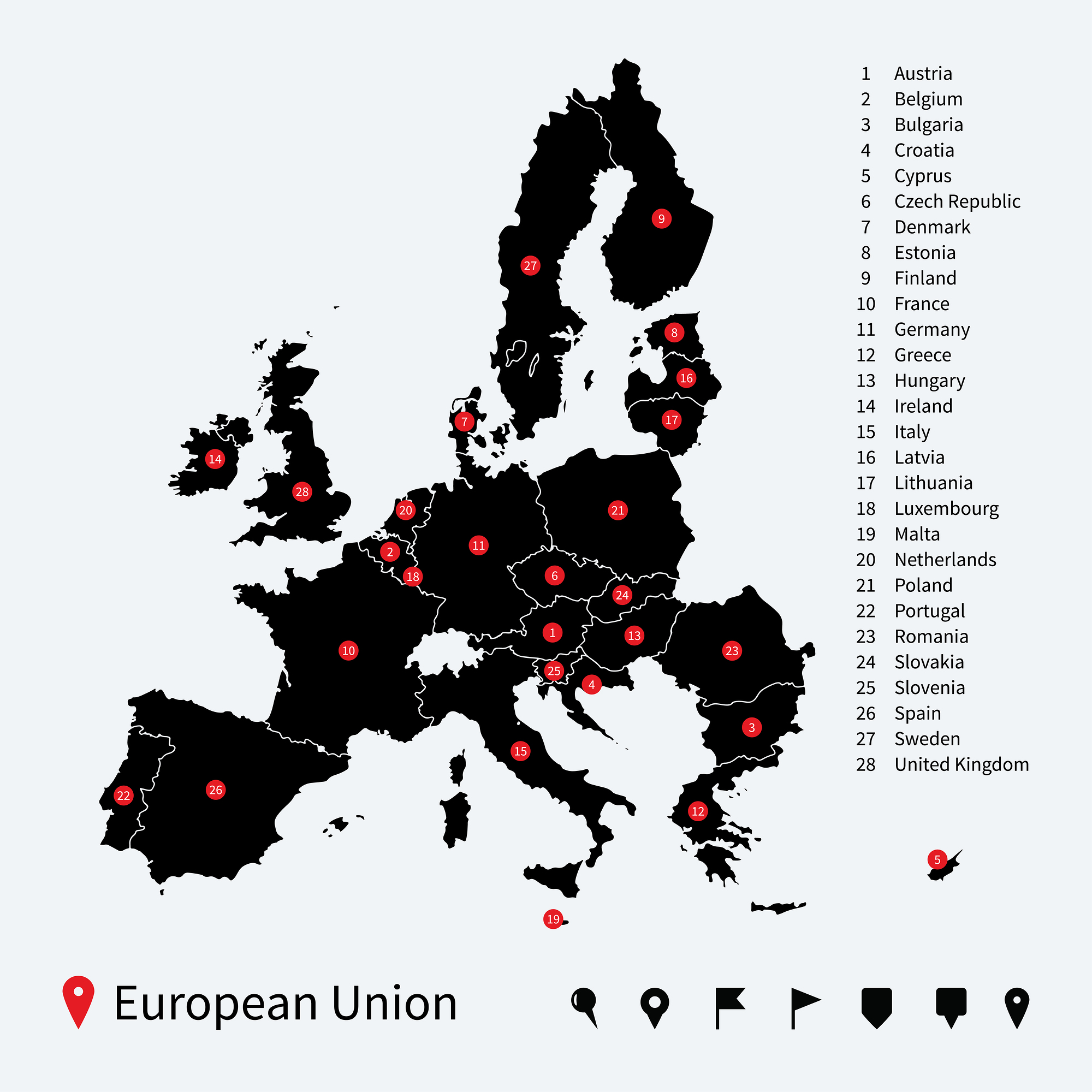
Essentially, as a legally non-binding document, this is largely only an exercise in awareness raising, but that represents a huge step forward from the ‘head-in-sand, everything-is-fine’ stance in respect of potential harm from exposure to electromagnetic fields which has been adopted until recently.
Most importantly, the rights of stated vulnerable groups are starting to be treated seriously. Electro-sensitivity, where severe, is being treated as a disability under the UK Equality Act 2010, and with that comes additional rights and legal protection, theoretically anyway.
But the question on everyone’s lips is how will Brexit affect us, right across the board. Let’s hope that the ground gained here in respect of safe working practice regarding EMFs is not lost.
For more specific information on the directive see here
Much of the advice we are asked to give concerns a low-EMF approach to property refurbishment, and in particular to electrical wiring installation. There are a number of things which can be done fairly straightforwardly and at reasonable cost which will have a significant impact and reduce power frequency EMFs from a building.
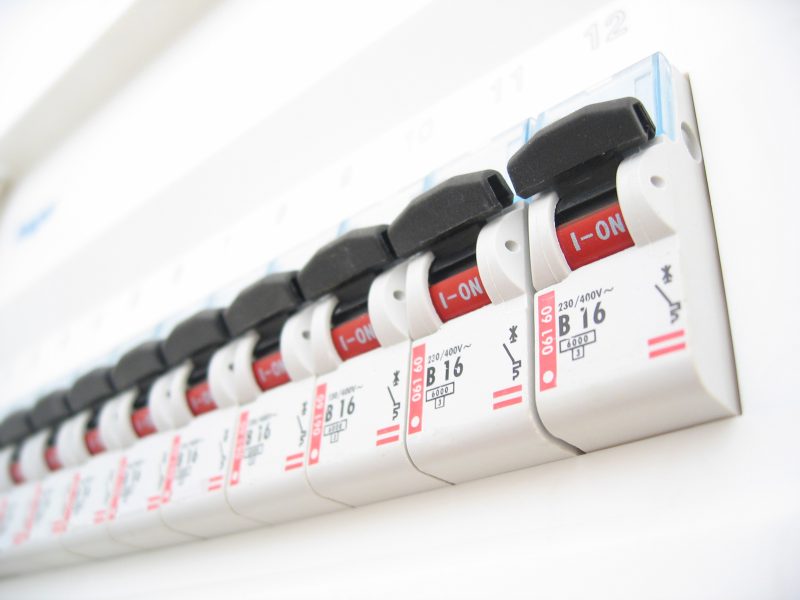 The location of the consumer unit is a key consideration as they typically give off high electrical and magnetic fields, so their proximity to bedrooms needs to be considered. A demand switch can be installed here which shuts the power supply right off when it detects current is not being drawn. The use of one (or more) of these will have the effect of creating an EMF-free environment on the circuit it is attached to.
So-called ‘dirty electricity’ or ‘DE’ Is becoming more of a problem for all of us. The devices and appliances we install and operate in our homes, along with the quality of the incoming electricity supply, affects the smooth cycle of power flow and introduces spikes of power which are thought to be biologically disruptive to building occupants. If there is DE coming from the incoming supply then the use of a voltage regulator can improve this situation. For DE generated indoors by power-hungry things like TFT/Plasma televisions, PCs, sound systems and some features of lighting e.g. low voltage halogen downlighters, CFL bulbs and dimmer switches, the use of individual filters would be more appropriate.
Where properties are being wired installation via radial circuits, as opposed to ring circuits, will have the result of lower levels of EMFs being produced. This would be of benefit to any building occupant, but for people suffering from electro-hypersensitivity going one step further and installing shielded cabling would have the effect of reducing EMFs to a negligible level. The shielding in such cables is usually a metal mesh and this must be earthed for the installation to be low EMF: essentially the mesh will contain and run to earth the fields associated with cabling and those that are typically detected by a survey running inside walls etc.
All the above points are general ideas for consideration. Apart from installation fo simple DE filters, involvement of a qualified electrician is necessary to ensure solutions are effective and safe. Not all electricians understand what customers are trying to achieve when they request a low-EMF installation but they should be willing to work with customers to achieve their intended result.
A recently screened TV program about the state of UK sleep produced some quite alarming statistics. For example; one third of those Brits surveyed complained they don’t get enough sleep which means potentially 20 million of us are affected.

the quality of sleep is a major factor in our health
With the possible exception of food, sleep is perhaps the most critical factor in determining our health or lack of it. Research from Cardiff University has shown that about 1 in 5 teenagers wake up in the night to check or post messages. Some doctors now claim that poor quality sleep is “the primary mental health issue” with Professor Colin Elspie at Oxford University stating that we are more than twice as likely to become unwell with a psychiatric disorder if we don’t sleep well. Others claim it to be a “major public health concern” – which it is.
Of course, there are apps to help us deal with sleeplessness and activity trackers which can tell us specifically how bad our sleep actually is. In the TV program, the question of whether technology could be causing these problems was raised but sadly not completely answered (of course it wasn’t!).
The top tips given for ‘sleep hygiene’ were:- stick to regular times to go to bed and get up; engage in some activity to wind down before going to bed (warm bath, relaxing music music), switch off gadgets/devices a few hours before going to bed (the point of this being so that your brain is not too active), and change your mattress as per guidelines of approximately every eight years.
So no mention of the now conclusive fact that the radiofrequency radiation from wireless devices alters our production of the night hormone melatonin which on its own can disrupt sleep to the quoted “nightmare of night time”. (For more information about the role of melatonin read this previous article). The Department of Health were asked to respond to the issues raised in the programme but were “unable to comment” (of course they were!). And NICE (National Institute for Clinical Excellence) said they were not able to issue guidelines yet as there is insufficient evidence (of course they did!).
Really, we need to wake up to the all-consuming harm our wireless world is causing us and stop denying there is a problem. That means all of us – politicians, manufacturers, doctors, the media, salesmen and us, the individual.
There is a general perception amongst the public that living near a mobile phone mast is not a desirable thing, unless of course a good mobile signal is a personal priority! But is it that simple?

We’ve all seen mobile phone masts on the horizon, lurking between trees or adorning roof tops, but how many people realise that such antennas are often disguised to look like chimneys, street signs and any number of ordinary objects. One can only surmise as to why operators do this. But are they harmful to live near?
The answer is not necessarily. Signals from mobile phone antennas can bounce around in a quite unpredictable way, distorted further by buildings and objects, so the strength of the signal can vary enormously. The topography of the land also has a bearing; if you live in a dip you are much less likely to be affected by high levels of radiation from masts than if you live on a hill, The beam of greatest intensity tends to fall between 150 and 300 metres from the antenna in a ‘lighthouse effect’. Side beams can cause localised hot spots closer to the base of the mast, highest levels typically with 30 metres. Furthermore, the drum-shaped transmitters have a very focussed beam, whilst the long oblong type tend to scatter their beam far and wide.
So if you can see a mast from your house it does not necessarily mean the signal level reaching it is at a harmful level. And if you can’t see it, it doesn’t necessarily mean levels are safely low. Interesting because estate agents know that houses near masts can be harder to sell and usually have to be sold with a discount on the price.
There is only one way of knowing what the strength of signal reaching a house is and that is to survey it. If you are concerned by high levels reaching your home there are several effective ways of screening so remedial action is possible.
Let’s be clear, that is 1,000,000,000,000,000,000 times more electromagnetic radiation in our environment compared with before all this madness started. As Dr Mallery-Blythe states in her 15 minute address to the Californian Commonwealth Club in the film below, if you spend time in large cities this is the magnitude of EMF you could well be exposed to.
Please take the time to watch it. Your own health and that of your family could depend on it. Halting the increase of radiofrequency radiation in our environments appears to be happening no time soon. But meantime everyone needs transparent information about the implications of this and the chance to safeguard our children at the very least.
The Get Wired 2015 conference was held last month in East Sussex and brought together some of the people at the forefront of thinking and acting in relation to the modern electromagnetic world and its risks to our health. Talks by the various presenters are gradually being made available on YouTube, the first of which is a talk by Prof Victor Newman.
His explanation of the cycle of change we are all experiencing is interesting and does give some hope for the future. Prof Newman describes all of this as good news and, in my view, most of it is. But his statement about fashion-following being an ally in all of this does not take any account of the natural world and the challenges and adaptations it faces in having to respond to constant bombardment by EMFs.
So OK, some celebrity or other starts the ball rolling by sporting fashion-forward EMF shielding clothing, a trend which is then picked up by fashion houses and high street retailers. Then anyone of us can pop into M&S or wherever to purchase shielding under garments. But that completely overlooks the effect we are having on the rest of the ecosystem. Bees, for example, will not be following fashion and purchasing shielding clothing. They will be dying.

No bees, no pollination, hungry people…
The sustainability of the human population is dependent upon many things, but right near the top of that list is food. Food which is grown as a result of crop pollination by bees. Experiments conducted by Dr Jochen Kuhn in Germany have conclusively shown that colonies of bees exposed to EMFs from a Dect phone do not thrive and in some cases collapse altogether. No bees means no crop fertilization which in turn will mean hungry humans.
Shielding ourselves from EMF proliferation should be a temporary and very short term measure whilst we – that is, industry – get to grips with creating new devices that can operate on very much lower signal strengths. Very low environmental levels of EMFs should mean we don’t need to shield ourselves in order to remain healthy and that bee colonies are not at risk of collapse.
We can play our part now by going back to first principles and asking the question “just because we can do something does it mean we should?”. Like it not, we all have a degree of social responsibility here. Yes, our wireless devices bring endless fun and convenience but right now the cost of that continues to increase. Ultimately, it will end in our own demise.